
Zero-Based Budgeting: How To Give Every Dollar A Job
Zero-based budgeting gives every dollar a job before the month starts. Learn the method step by step, with a simple template you can run each month.

Learning Center
Clear guides, comparisons, and tutorials to help you make better money, productivity, wellness, and business decisions.
Newest articles
Zero-based budgeting gives every dollar a job before the month starts. Learn the method step by step, with a simple template you can run each month.
A simple rule for how much of your side hustle income to set aside for taxes, why 25-30% is the common answer, and how to plan quarterly payments in the US.
Busy is not the same as profitable. Learn how to measure affiliate marketing ROI, which numbers to track, and how to tell winning campaigns from expensive ones.
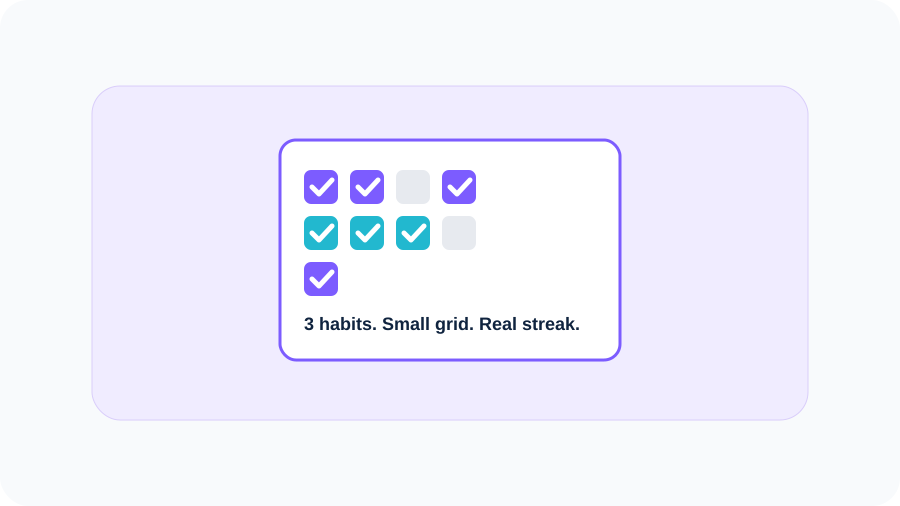
You do not need another app to build a habit. Learn simple paper and printable habit tracking methods that are quick, private, and easy to actually keep up.
When the day gets away from you and the task list is chaos, you need a reset, not a productivity overhaul. A simple, low-friction way to find your next step.
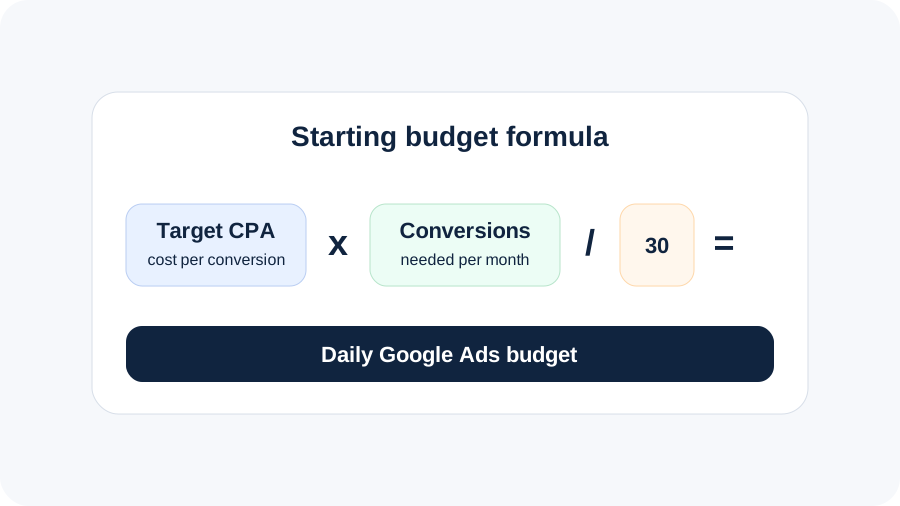
How much a small business should budget for Google Ads to get usable data, why spending too little wastes more, and the formula to work it out.
Most debt apps want your bank login and a subscription. A spreadsheet wants neither. An honest comparison of what each is actually good at.
A free credit card payoff spreadsheet that ranks your cards by balance and by interest rate. Works in Excel, Google Sheets, and LibreOffice. No signup wall, no bank login.
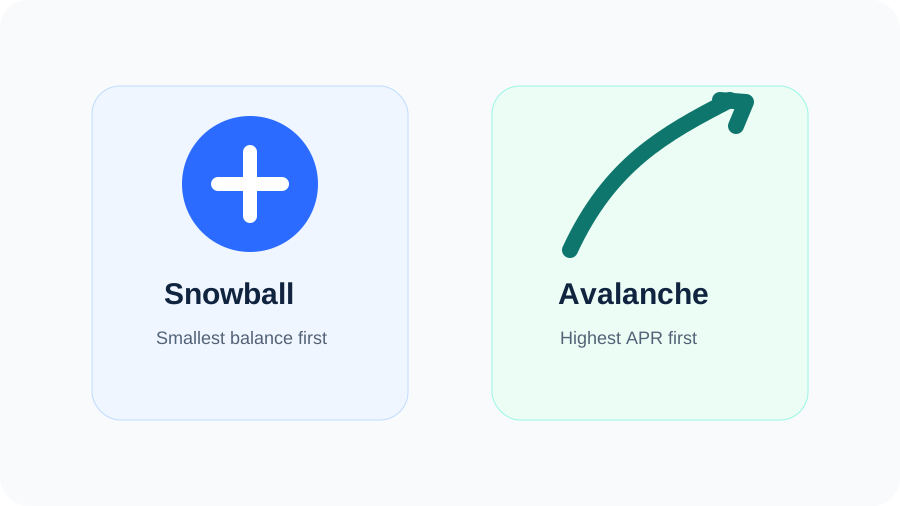
The avalanche method costs less in interest. The snowball method gets you a win sooner. Here is how to work out which one you will actually finish, with the numbers laid out.
Paying the minimum on a $5,000 card at 22.9% takes around 19 years and costs about $8,400 in interest. Here is the arithmetic, and what changes it.
Free printable debt payoff worksheets - a balance list, a payoff order sheet, and a monthly tracker. Letter size, print at home, fill in by hand.
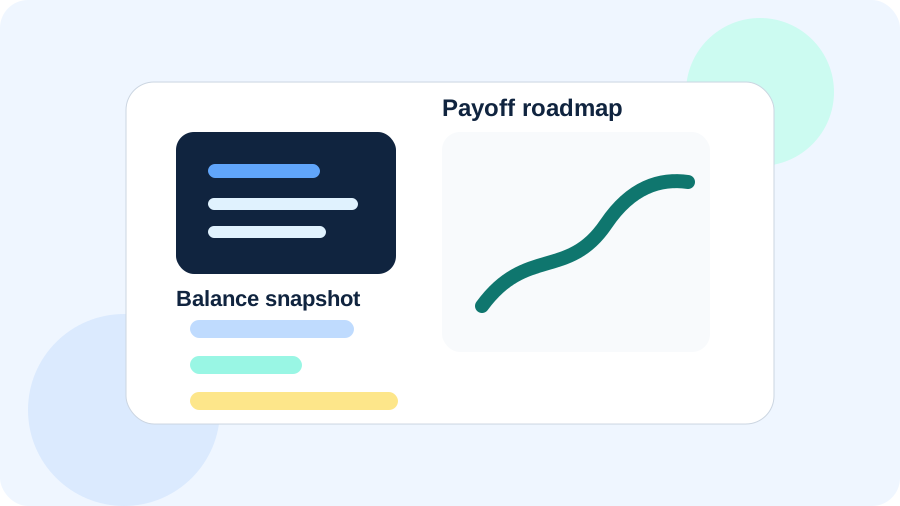
A practical guide to listing balances, choosing a payoff method, and building a realistic credit card debt plan.
Build a morning routine with fewer decisions, visible cues, and a simple reset path when the day starts messy.
A realistic plan for paying off credit card debt when there is little left over each month.
How big an emergency fund should be, where to keep it, and how to build one on a thin budget.
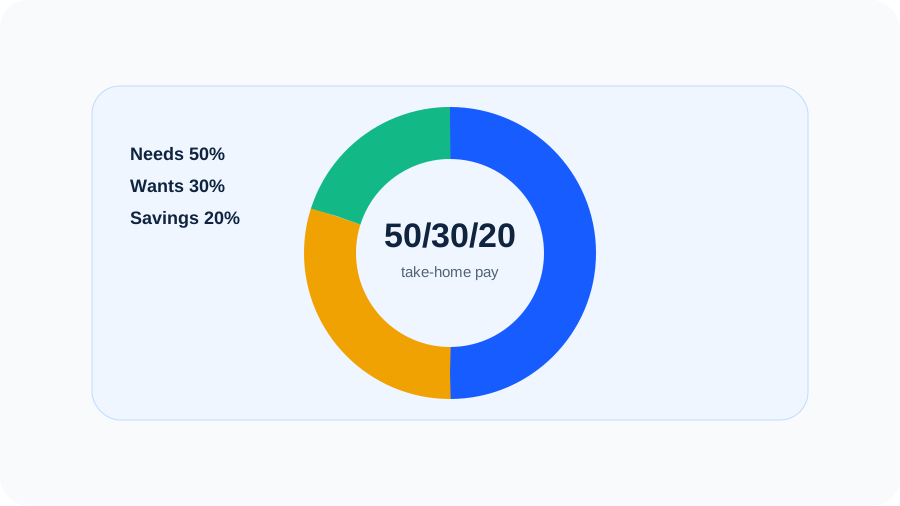
What counts as a need, why the rule breaks in high-rent cities, and adjusted splits for when the standard one doesn't fit.
What a sinking fund is, how it differs from an emergency fund, and the categories most households need.
The four things to check every month, in the order that makes it fast, so it actually happens.
Why elaborate morning routines collapse and how to build a three-tier routine with a two-minute minimum.
Why most habit trackers get abandoned, how many habits to track at once, and a system that survives missed days.
A one-hour weekly reset covering home, calendar, meals, and priorities.
A beginner's meal planning system that takes 20 minutes a week, built around meals you already know.
A decluttering method built on 20-minute sessions instead of marathon weekends.
A 90-day plan for starting a side hustle around a full-time job, with realistic expectations.
A sinking fund turns a known future expense into a small monthly deposit. See a real $3,120/year example split into five funds.
Learn the net worth formula with a full worked example: $363,900 in assets minus $274,900 in liabilities.
A real $500 budget example showing clicks, conversions, ROAS, and how Quality Score lowers your cost per click.
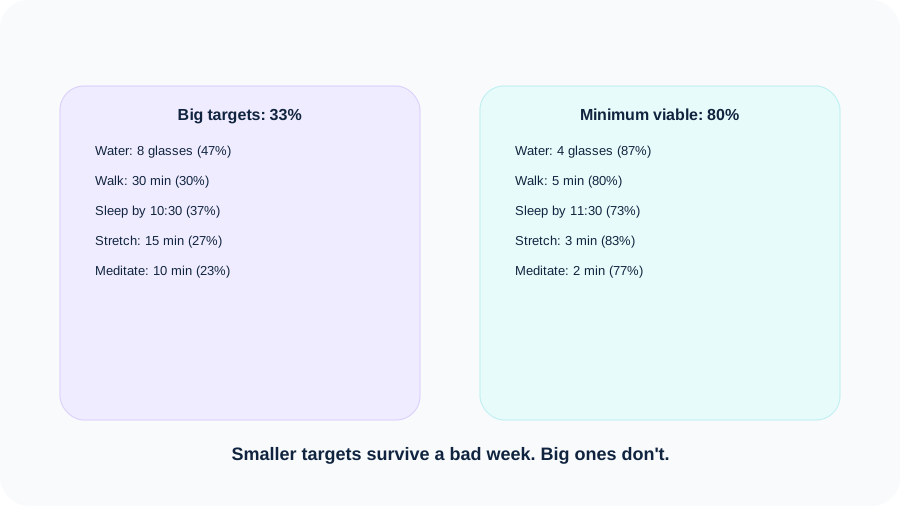
A tracked 30-day comparison shows why smaller minimum-viable habit targets stick far better than ambitious ones.
A real cost comparison: a Texas LLC costs $300 total, the same LLC in California costs $4,070 over five years.
Why the common 2,080-hour rate formula undercharges freelancers by more than half, with the real math to fix it.
Cutting average collection time from 45 days to 12 frees up $6,600 in cash — a step-by-step faster invoicing process.
How to calculate a business emergency fund target, with a worked example reaching $8,400 in reserve in 14 months.
A real self-audit found only 30% of one blog's affiliate links properly disclosed. Here's what the FTC requires.
Four numbers reveal most of what a quarterly review needs: profit margin, client concentration, cash reserve, pipeline.
Learning categories
Free checklist
A one-page printable checklist to list balances, choose a payoff method, and pick the next card to target. Free by email, unsubscribe anytime.