
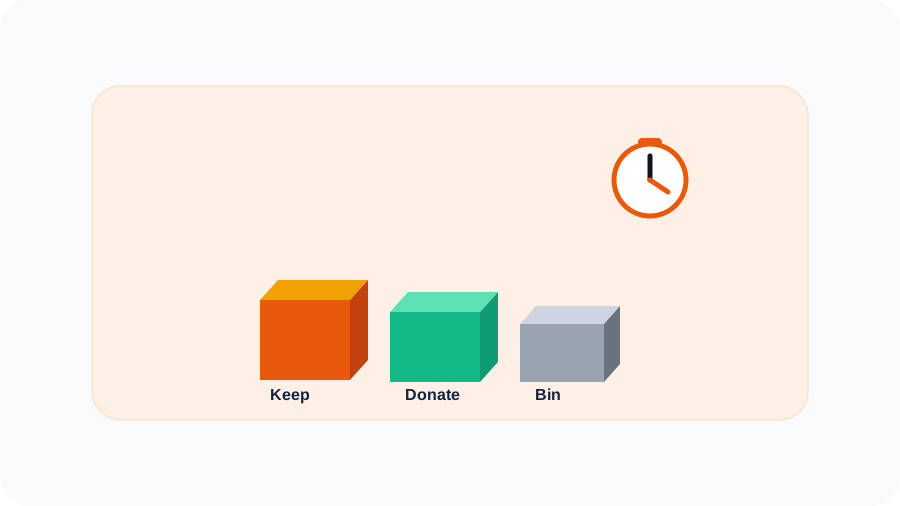
Twenty-minute sessions, worked in the right order, beat a weekend every time — because decision-making is a limited resource each day, not an unlimited one you can spend eight hours of in one sitting.
Work Easy-To-Hard, And Save Sentimental For Last
Start with a small, low-emotion, high-visibility area — a kitchen counter, a bathroom drawer, the hallway surface where post accumulates. Visible wins build momentum, and low-emotion categories let you practise deciding quickly before you reach anything that actually matters to you.
Sentimental items go last, always. Doing them first burns the energy you need for everything else, and by the time you reach genuinely difficult items after working through everything easier, you'll have made hundreds of small decisions and gotten measurably faster at it. Decision-making is a skill that improves with reps.
Deciding Fast
Speed matters, because the longer you hold an object, the more likely you are to keep it regardless of whether you need it. Three questions, about ten seconds:
- Have I used it in the last year? Seasonal items get a pass; almost everything else that hasn't been used in twelve months won't be.
- Would I buy it again today? This cuts through sunk cost — what it cost is gone either way.
- Could I replace it easily? If it's cheap and available quickly, you don't need to store it for a hypothetical.
If you can't answer within about ten seconds, it goes in a maybe box rather than becoming a standing debate.
The Maybe Box
Put genuinely uncertain items in a box, write today's date on it, and store it out of sight. Set a reminder for six months out. If you haven't opened the box by then, donate it unopened — and don't look inside first, since opening it restarts every decision you already made.
Product recommendation
Recommended DaveWays Resources
Wellness Habit Planner
Simple trackers for routines and habits, including regular decluttering sessions.
ADHD-Friendly Daily Reset
A low-friction printable reset pack for overwhelmed days and scattered task lists.
Getting It Out Of The House
Decluttering isn't finished until things have actually left — a sorted pile is the same clutter with better organisation. Donate by default, since it's the fastest route and clears space immediately. Sell only the handful of items genuinely worth the effort of photos and listings; a common failure is deciding to sell forty things and never listing any of them. Set a hard deadline of about a week for everything to leave, or bags quietly become permanent.
Stopping It Coming Back
A landing zone with limits — one defined spot for incoming post, deliveries, and bags — that gets emptied daily does most of the work of staying decluttered. Clutter is largely a problem of things having no assigned home; the landing zone makes that visible rather than left to drift. Pair it with a simple one-in-one-out rule for anything you buy in a category that's already full.
FAQ
Where should I start?
A small, low-emotion, high-visibility area, to build momentum before anything sentimental.
How long should a session be?
Twenty to thirty minutes with a timer. Longer sessions produce worse decisions.
How do I decide fast?
Have I used it this year, would I buy it again, could I replace it easily. Unclear answers go in a dated maybe box.
What about sentimental items?
Leave them until last - they're slow and emotionally expensive to sort.
Educational resource only. General information, not professional organising or medical advice.