
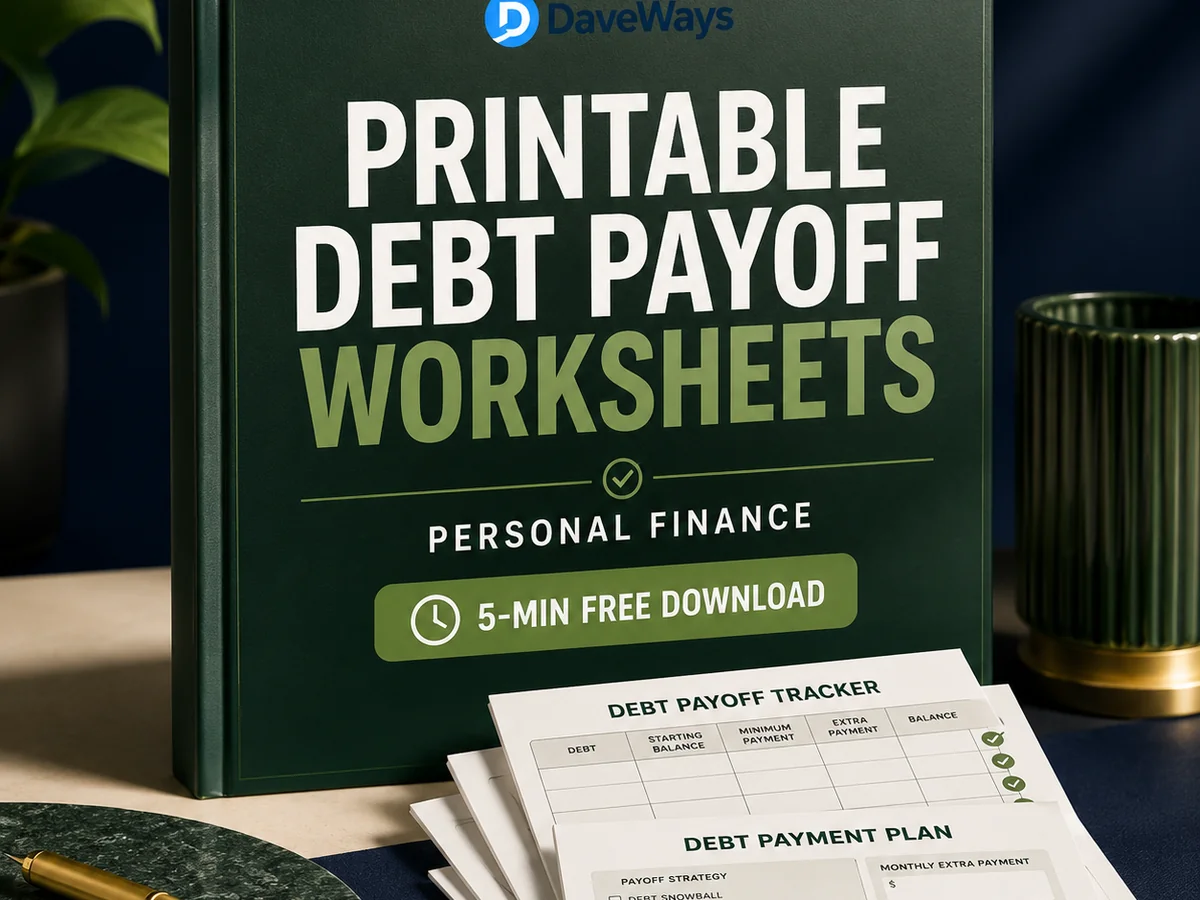
Some people track debt in a spreadsheet. Some people need it on paper, stuck to the fridge, where it can't be closed and forgotten.
If you're the second kind, this is for you.
Download the free printable worksheets (PDF)
Three pages, Letter size, prints on a normal home printer in black and white. No color ink required, because asking someone trying to clear debt to burn a color cartridge would be a bit much.
What's In The Pack
Page one — the balance list. Every card and loan in one place: name, balance, interest rate, minimum payment, due date. The point isn't the sums, it's seeing everything on a single sheet. Most people have genuinely never done this, and the total at the bottom is usually the moment things click.
Page two — the payoff order sheet. Two columns. Rank your debts smallest balance first on one side, highest interest rate on the other. Then choose which column you're following. That decision is the snowball versus avalanche question, and having both orders in front of you on paper makes it much easier to settle.
Page three — the monthly tracker. Twelve rows, one per month. Record the balance, what you paid, and what's left. It's deliberately plain — a column of numbers going down is the most reliable motivation there is, and it only works if you can see all twelve months at once.
Why Paper Still Works
There's a real argument for handwriting this rather than typing it.
Writing a balance by hand is slower than reading it off a screen, and the slowness is the point — it's harder to skim past a number you had to write out. People consistently report that the first time they physically wrote down their total debt was the moment it stopped being abstract.
A printed sheet is also visible. It sits on the fridge or the desk and you see it whether or not you meant to. An app requires you to choose to open it, and on the days you least want to look is exactly when you won't.
And there's nothing to maintain. No login, no subscription, no sync, no company reading your finances. A piece of paper works forever.
The trade-off is that paper won't calculate anything. If you want interest totals worked out and your cards ranked automatically, use the free spreadsheet version instead. Plenty of people use both — spreadsheet for the maths, printed tracker on the wall.
How To Actually Use Them
Fill in page one completely, in one sitting, with every statement in front of you. Include the card you'd rather not think about. Leaving one off is common and it defeats the entire exercise, because the total is the whole point.
Then fill in page two and commit to one column. Not both, not a blend. One.
Then, once a month on the same date, update page three. Five minutes. Same day each month so it becomes automatic rather than something you have to remember.
One habit worth adopting: when a debt hits zero, cross it out in pen rather than tidying the sheet up. The crossed-out lines are the record of what you've done, and on a difficult month that visible history is what keeps people going.
When A Debt Gets Cleared
Take whatever you were paying on that debt and move the entire amount to the next one on your list. Don't let it quietly return to normal spending.
This is the step most people skip, and it's the one that makes the difference. Each cleared debt makes the next payment larger, which clears the next one faster, which makes the payment larger again. The final stretch of a payoff plan moves much faster than the beginning — but only if you keep rolling the payments forward.
If You Want More Structure
The free pack covers the basics. OFF THE CARD ($24.99, one-time) includes a 14-page printable worksheet pack, a 25-page payoff guide, a 90-day action plan, and a spreadsheet tracker. One payment, no subscription, 30-day money-back guarantee.
The free sheets work perfectly well on their own, though. Print them and start today — the version you fill in this evening beats the better version you download next month.
Product recommendation
Recommended DaveWays Resources
OFF THE CARD
A plain-English credit-card payoff toolkit with a guide, printable worksheets, a 90-day plan, and an Excel or Google Sheets-compatible tracker.
Budget Blueprint
A monthly budgeting workbook for planning income, bills, flexible spending, and savings.
FAQ
What size do these print at?
Letter (8.5 × 11 inches). They'll print on A4 as well; select "fit to page" and the margins adjust.
Can I fill them in on a tablet?
Yes. Open the PDF in any annotation app and write on it with a stylus.
Do I need color ink?
No. Designed for black and white.
Can I print more than one copy?
Print as many as you like for your own use. Please don't redistribute or resell the files.
How many debts do they hold?
The balance list has ten rows. Print a second copy if you need more.
Is this financial advice?
No, it's an organizing tool. If you're behind on payments or facing collections, contact a non-profit credit counseling service.
Educational resource only. Not financial, tax, legal, or credit advice.
Educational content, not financial advice. Your situation, interest rates, and card terms may differ — confirm current numbers with your card issuer or a licensed financial advisor before changing your payoff plan.
Sources: CFPB: Credit cards and CFPB: Debt collection.
Free checklist
Get The 5-Step Credit Card Payoff Checklist.
A one-page printable checklist to list balances, choose a payoff method, and pick the next card to target. Free by email, unsubscribe anytime.