
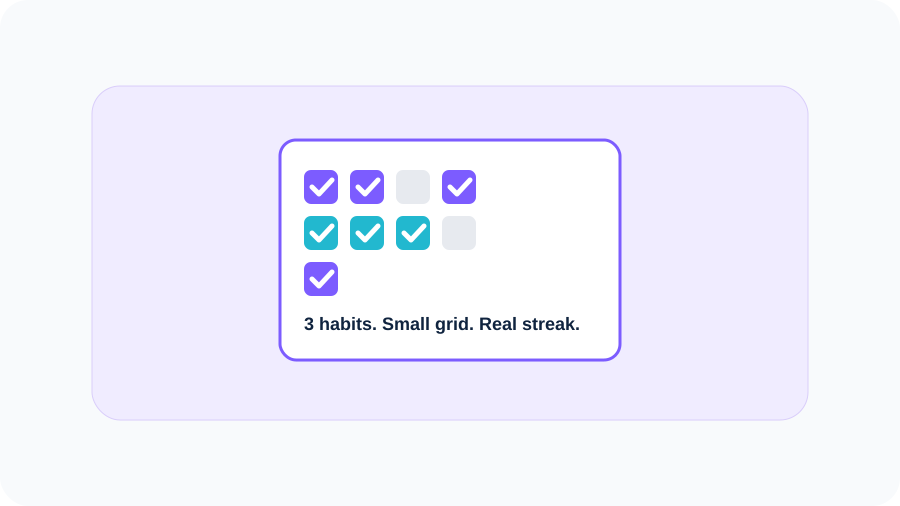
Most habit trackers fail for one of three reasons: too many habits at once, a format that punishes a single missed day, or tracking for tracking's sake with no clear signal about what to change. Fix those three and a simple paper grid outperforms almost any app.
How Many Habits To Track
Three is a sensible ceiling for most people, and one is a perfectly respectable number to start with. Tracking eight habits at once produces eight partial efforts rather than a few done properly, and a tracker that looks like a failure report gets abandoned fast. Add a fourth habit only once an existing one is running on autopilot.
Paper Versus App
For most people, paper left somewhere visible wins. It has no notification fatigue, no login screen, and it stays in view rather than buried in a phone. Apps work well specifically if you already open them daily for an unrelated reason — otherwise the extra step of opening an app is itself friction that a paper grid on the fridge doesn't have.
The Missed-Day Rule That Matters
Mark a missed day honestly rather than skipping the entry, and do the smallest possible version the next day. The rule that actually protects a habit isn't perfection — it's never missing twice in a row. One missed day is noise. Two consecutive missed days is the start of a new pattern, and that's the point to intervene, not after a week has slipped.
Judge the habit by the month, not the streak. Twenty-four out of thirty-one days is a strong month. A perfect-streak framing calls that a failure, which is both inaccurate and demotivating.
Product recommendation
Recommended DaveWays Resources
Wellness Habit Planner
Simple trackers for movement, sleep, mood, meals, and daily wellness habits.
ADHD-Friendly Daily Reset
A low-friction printable reset pack for overwhelmed days and scattered task lists.
Reviewing Without Turning It Into Self-Criticism
Once a month, glance back at the grid and ask one question: is this habit still worth the slot, or has it run its course? Dropping a habit you've genuinely absorbed into daily life — and replacing it with a new one — is success, not failure. The tracker's job is to surface that decision, not to generate guilt about imperfect weeks.
The Short Version
Track one to three habits, not eight. Prefer paper unless an app genuinely fits your day. Mark misses honestly, never miss twice in a row, and judge by the month rather than the unbroken streak.
FAQ
How many habits should I track at once?
Three is a good ceiling for most people; add a fourth only once an existing one runs on autopilot.
Is paper better than an app?
For most people, yes - no notification fatigue, no login, stays visible.
What should I do when I miss a day?
Mark it honestly and do the smallest version the next day. Never miss twice in a row.
Do I need to batch prep?
No. Batch approaches are one useful option, not a requirement.
Is this medical advice?
No. This is general educational information, not medical advice.
Educational resource only. Not medical or mental health advice.