
Most wellness routines don't fail because the habits were wrong — walking, drinking water, sleeping earlier, and stretching are all genuinely good ideas. They fail because the target size only works on a day that's already going well, and a normal week has bad days built into it. A routine that can't survive a bad Tuesday isn't really a routine, it's a plan that only runs on easy weeks.
A Real 30-Day Comparison
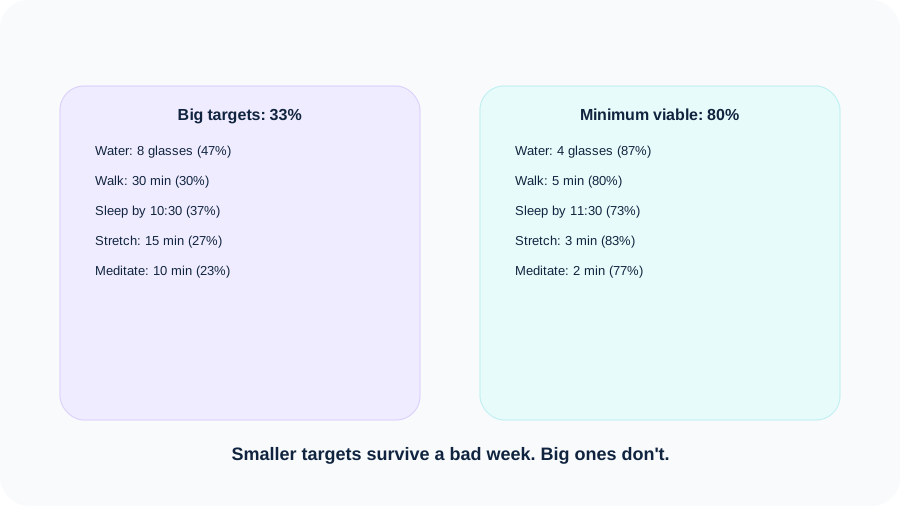
Tracking five wellness habits daily for 30 days at their initial, ambitious targets produced this: drinking 8 glasses of water hit on 14 of 30 days (47%), a 30-minute walk on 9 of 30 days (30%), being asleep by 10:30pm on 11 of 30 days (37%), 15 minutes of stretching on 8 of 30 days (27%), and 10 minutes of meditation on 7 of 30 days (23%). Average completion across all five: 33%.
Same five habits, same person, next 30 days — but each target scaled down to its minimum viable version: 4 glasses of water instead of 8, a 5-minute walk instead of 30, sleep by 11:30pm instead of 10:30pm, 3 minutes of stretching instead of 15, and 2 minutes of meditation instead of 10. Results: water 26/30 (87%), walk 24/30 (80%), sleep 22/30 (73%), stretch 25/30 (83%), meditate 23/30 (77%). Average completion: 80%.
Nothing about motivation changed between the two months. What changed was the size of "done" — and a habit that's actually completed 80% of the time at a smaller size builds far more real momentum than one completed 33% of the time at a size that looked more impressive on paper.
Why Minimum Viable Targets Work
A big target only gets completed on a day that already has enough time, energy, and motivation to spare — which, realistically, isn't most days. A minimum viable target is deliberately sized to survive a day that has none of those things: a 5-minute walk fits into a lunch break even on the busiest day; a 30-minute walk usually doesn't. The goal of the small version isn't to replace the ambitious version forever — it's to keep the streak alive on the days the ambitious version simply isn't going to happen, so the habit doesn't reset back to zero.
Step-by-Step: Building Your Own Routine
Choose two or three habits to start, not five or more — the tracked example above ran five at once, which is workable once a routine is established, but a beginner spreading limited willpower across five new habits simultaneously usually ends up inconsistent in all of them rather than solid in a few. For each habit, define two versions: the target version for a normal day, and a minimum viable version small enough to complete even on the worst realistic day — not a version so small it feels meaningless, just small enough to actually happen.
Track daily with a simple check mark, not a detailed log. The value of tracking isn't the data itself, it's the visual streak — seeing two consecutive misses is what usually triggers course correction, and a system with no visible record removes that signal entirely. Attach each habit to an existing routine anchor (right after brushing teeth, right after making coffee) rather than a floating "sometime today" intention, since a specific trigger point is far more reliable than a vague daily reminder.
What to Do After a Bad Stretch
After missing several days in a row, restart with the minimum viable version, not the full-size version, and resist the urge to make up for lost days by doing more than usual on the comeback day. Overcorrecting after a lapse — a 45-minute walk to "make up for" a week of missed 30-minute walks — makes the restart itself feel effortful and unpleasant, which increases the odds of another lapse rather than reducing it. The habit that survives long-term is the one that's easy to restart, not the one that demanded the most on any single day.
Habit Stacking: Anchoring Each Habit to Something That Already Happens
A habit with no fixed trigger point competes with every other decision in the day for attention, which is part of why "sometime today" versions of a habit get skipped far more often than versions tied to a specific, already-existing moment. Habit stacking solves this by attaching each new habit directly to a routine step that already happens reliably, without needing a separate reminder.
In the tracked example above, the five habits could stack onto existing anchors like this: the first glass of water goes right after waking, before coffee; the 5-minute walk (or 30-minute version) happens immediately after lunch, using the natural break already built into the day; stretching happens right after brushing teeth at night; meditation happens the moment a work laptop closes for the day; and the wind-down toward an earlier bedtime starts the moment the evening dishes are done. None of these require remembering a new time slot — each one rides on a cue that was already going to happen regardless.
The anchor matters more than the habit's size when it comes to consistency: a small habit with a reliable, specific anchor tends to outperform a bigger habit with a vague "at some point" trigger, because the anchor itself becomes the reminder, and a reminder that's part of the day's existing structure doesn't rely on memory or willpower to fire at the right moment.
The Short Version
Track your actual completion rate for a few weeks before assuming a routine isn't working — the problem is usually target size, not motivation. Build a minimum viable version of every habit for bad days, start with two or three habits rather than five, anchor each to an existing routine point, and restart with the small version, not the big one, after any lapse.
Product recommendation
Recommended DaveWays Resources
Wellness Habit Planner
A daily and weekly tracker built around both a target version and a minimum-viable version of each habit.
Habit Tracker
A general-purpose habit tracker for building routines beyond wellness, using the same streak-based tracking approach.
FAQ
Why do wellness habits fail even when I'm motivated at the start?
Targets are usually sized for a best-case day, so the routine only survives on days already going well. One bad week can break the habit entirely without a smaller fallback version.
What is a minimum viable habit?
The smallest version of a habit that still counts as done on a genuinely bad day, like a 5-minute walk instead of 30. It protects consistency; it doesn't replace the full version on a normal day.
How many habits should I try to build at once?
Two or three is more realistic than five or more for a beginner. Too many at once spreads willpower thin and tends to produce inconsistency across all of them.
Should I track wellness habits daily?
Yes, a simple daily check mark is enough. The visual streak is what makes missing two days in a row feel different from missing one.
What should I do after missing several days in a row?
Restart with the minimum viable version, not the full-size version, and don't try to make up for missed days.
Educational and wellness resource only, not medical advice. This content does not diagnose, treat, or provide personalized health guidance — consult a doctor or qualified health professional for advice specific to your situation. The tracked example above is illustrative of one routine; results vary by individual. See the Physical Activity Guidelines for Americans (health.gov) and the National Heart, Lung, and Blood Institute's sleep guidance for authoritative health information.
Join the email list for practical wellness worksheets, buying guides, and product updates.