
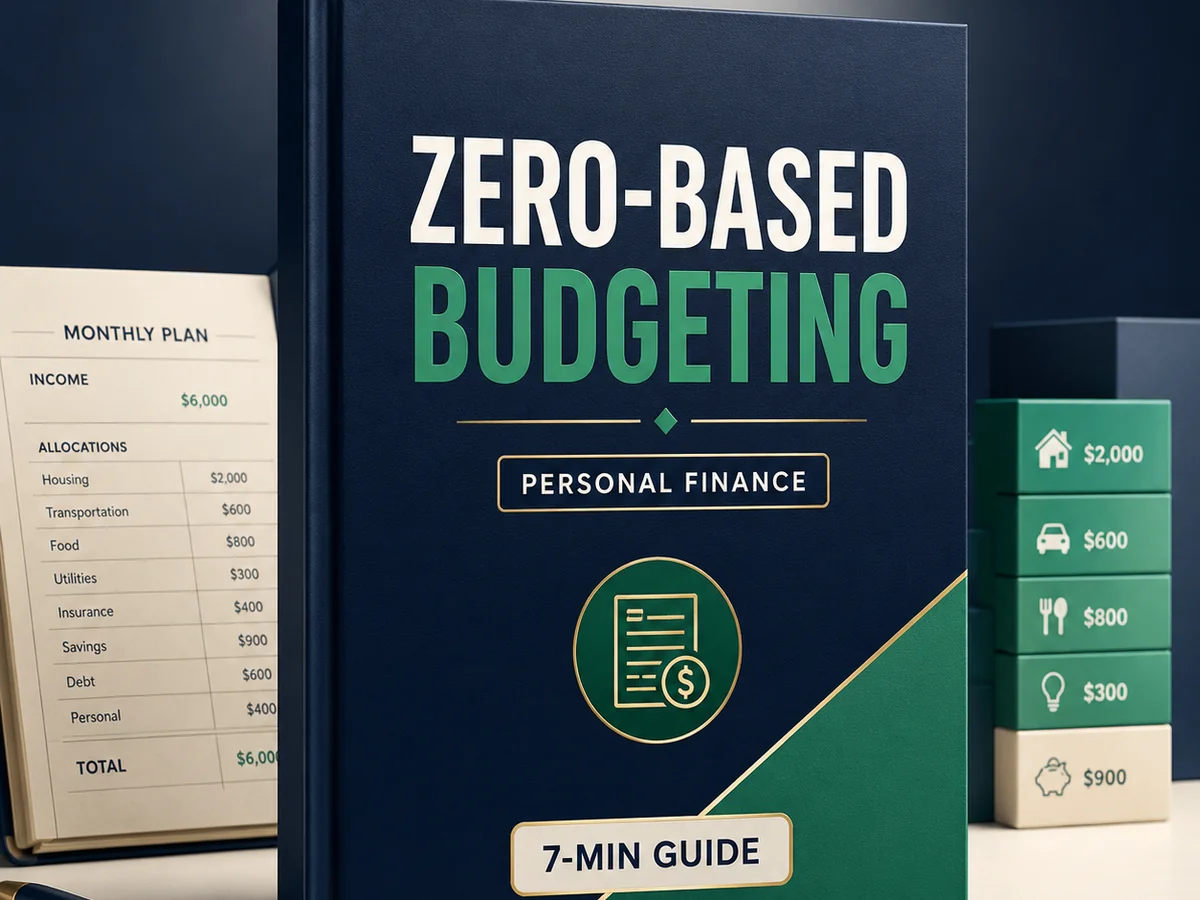
What Zero-based Budgeting Actually Is
Assign every dollar of income a job before you spend it. Bills, spending, savings, debt payments, and giving are planned until income minus every assignment equals zero. Zero does not mean broke; it means no dollar is unassigned.
The Five-step Method
Add up income you can count on; list fixed, flexible, and irregular expenses; use a few clear buckets; assign dollars until you reach zero; then track and adjust through the month. A budget is a plan, not a prediction.
A Real $4,200/Month Example
| Category | Amount |
|---|---|
| Rent | $1,400 |
| Utilities | $180 |
| Groceries | $500 |
| Transportation | $250 |
| Insurance | $200 |
| Debt minimum payments | $350 |
| Sinking fund (car repairs, gifts) | $220 |
| Savings | $400 |
| Discretionary spending | $300 |
| Giving | $100 |
| Buffer | $300 |
| Total assigned | $4,200 |
$4,200 income minus $4,200 assigned equals $0 left to assign — that is a complete zero-based budget for that month.
- Add up guaranteed monthly income.
- List every expense category: fixed, flexible, and irregular.
- Assign dollars to each category, starting with essentials.
- Keep assigning until income minus assignments equals $0.
- Track spending during the month and adjust categories, not the total.
If Your Income Is Irregular
Budget the money you actually have, not the money you hope to earn. Fund essential categories first each time a payment lands, then work down the list.
For example, if your income ranges from $3,000 in a slow month to $5,200 in a strong one, build your zero-based budget against the $3,000 baseline. Fund essential categories (rent, utilities, groceries, minimum debt payments) first, in that order, then treat anything earned above $3,000 as bonus income to assign once it actually lands in your account — not before.
Doing It In A Spreadsheet
A spreadsheet keeps the running total updated so you can see the left-to-assign number reach zero.
Related Reading
Get New DaveWays Guides
Join the email list for practical budgeting worksheets, buying guides, and product updates.
Educational content, not financial advice. Confirm your own numbers and consult a licensed financial advisor before making budgeting or savings decisions.
Sources: CFPB: Financial well-being and CFPB: Money as You Grow.
Product recommendation
Recommended DaveWays Resources
Budget Blueprint
A monthly budgeting workbook for planning income, bills, flexible spending, and savings.
FAQ
What does zero-based budgeting mean?
You assign every dollar of expected income to a category before the month begins until income minus assignments equals zero.
Is zero-based budgeting good for irregular income?
Yes. Budget money you actually have now and fund important categories first.
Do I need an app for zero-based budgeting?
No. A notebook or spreadsheet works.
DaveWays content is educational and does not replace professional financial, legal, tax, medical, or mental-health advice.