
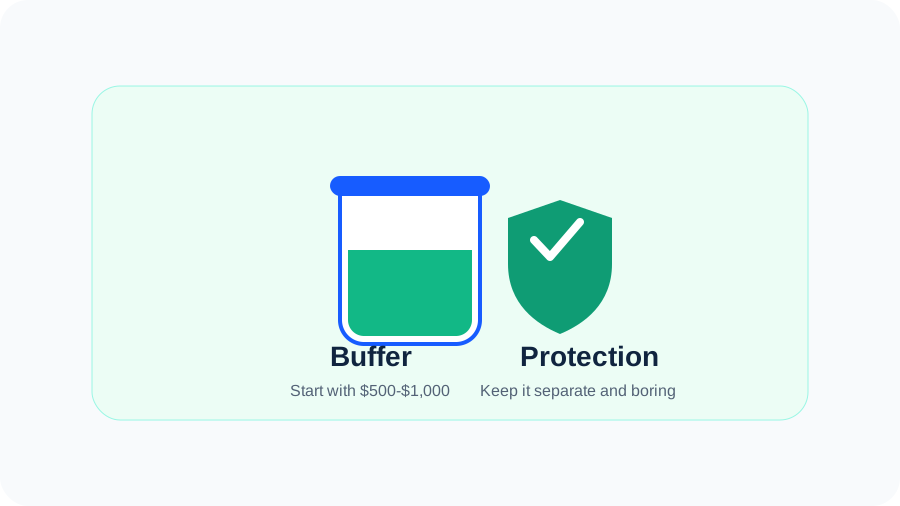
Without a buffer, a $700 car repair becomes a $700 credit card balance, and if you pay it down slowly, that turns into $900 or more over a couple of years. Worse, it usually arrives while you're already paying something else down, so it doesn't just add cost — it resets a plan you were following.
An emergency fund isn't an investment and it isn't meant to grow your wealth. It's insurance you self-underwrite, and its return is measured in the interest and disruption it prevents.
How Much You Actually Need
The standard answer is three to six months of expenses. It's a reasonable rule and a poor starting point, because for most households it produces a number so large it's paralysing. Two corrections make it usable.
First: months of essential expenses, not months of income. Your emergency budget isn't your normal budget — in a genuine income disruption you'd cut streaming and discretionary spending immediately. Calculate rent, utilities, groceries, insurance, transport, and minimum debt payments. That number is usually well below your total spending.
Second: the right target depends on how replaceable your income is. Two stable incomes with in-demand skills can reasonably target three months. A single income or a specialised role with a narrow job market should lean toward six months or more. Variable or commission income benefits from a fund that also absorbs normal income swings, not just true emergencies.
The Milestones That Make It Achievable
Don't aim at the final number. Aim at the next milestone, since each one meaningfully changes your exposure and is small enough to reach before motivation runs out.
- $500–$1,000 starter buffer. Covers most small surprise repairs and bills. This first amount is disproportionately valuable, because most financial surprises are a few hundred dollars, not a job loss.
- One month of essentials. Absorbs a missed or delayed paycheque without any other action needed.
- Three months of essentials. Covers a typical job search for most fields.
- Your full target (three to nine months). Sized to your specific income risk from the section above.
Where To Keep It
Two requirements pull in opposite directions: you need the money accessible within a day or two, and you need it far enough away that it doesn't get spent on a weekend.
A separate high-yield savings account at a different institution from your everyday checking usually threads that needle well — it isn't one tap from your debit card, but a transfer still clears quickly when you actually need it. Naming the account something like “Emergency — do not touch” sounds silly and measurably reduces casual withdrawals. Keep it out of investments; money you might need in 90 days shouldn't carry market risk.
Funding It On A Thin Budget
Automate a small transfer the day after payday, since money that leaves before you plan around it doesn't require willpower. Start at whatever survives the test “would I notice if this vanished?” — often $20 or $30, not $200.
If you're also carrying high-interest debt, most plans suggest this order: build the $500–$1,000 starter fund first, then direct extra money at the highest-interest debt, then return to finish the full emergency fund once that debt is cleared. Without the starter buffer, the first surprise expense usually lands straight back on the card you're trying to pay off.
Product recommendation
Recommended DaveWays Resources
Net Worth Tracker
Log assets and liabilities each month and watch your financial picture change over time.
All-in-One Budget Spreadsheet
Plan income, bills, spending, debt, and savings on one connected annual and monthly workbook.
Rules For Spending It
A fund with no spending rules gets drained by degrees. A withdrawal should meet three tests: unexpected, necessary, and urgent. A broken boiler in January is all three. A holiday is none. A car repair you've known about for months is necessary but not unexpected — that one belongs in a sinking fund instead.
When you do spend from it, treat refilling it as a priority in the following months, ahead of extra debt payments. Using the fund isn't a failure. Not rebuilding it is.
The Short Version
If you're at zero today, the useful move isn't calculating a six-month target — it's opening a separate savings account and moving $20 into it. The number matters less than the account existing and having a direction from here.
FAQ
How much should an emergency fund be?
Three to six months of essential expenses is common guidance. Start with $500-$1,000, then one month, then three.
Where should I keep my emergency fund?
A separate high-yield savings account, ideally at a different institution from your everyday checking, accessible within a day or two but not one tap from your debit card.
Emergency fund or pay off debt first?
Starter fund of $500-$1,000 first, then high-interest debt, then finish the full fund.
What actually counts as an emergency?
Unexpected, necessary, and urgent. A predictable annual bill isn't an emergency - that's a sinking fund.
Should I invest my emergency fund for better returns?
No. Money you might need within 90 days shouldn't carry market risk.
Educational resource only. Not financial, tax, legal, or credit advice.