Most quiet product launches fail before launch day, not on it. The product gets built well, then announced once, to an audience that was never warmed up to expect it. The fix isn't a better announcement post — it's building the audience during the weeks the product is being built, not after.
The 4 Phases of a Launch
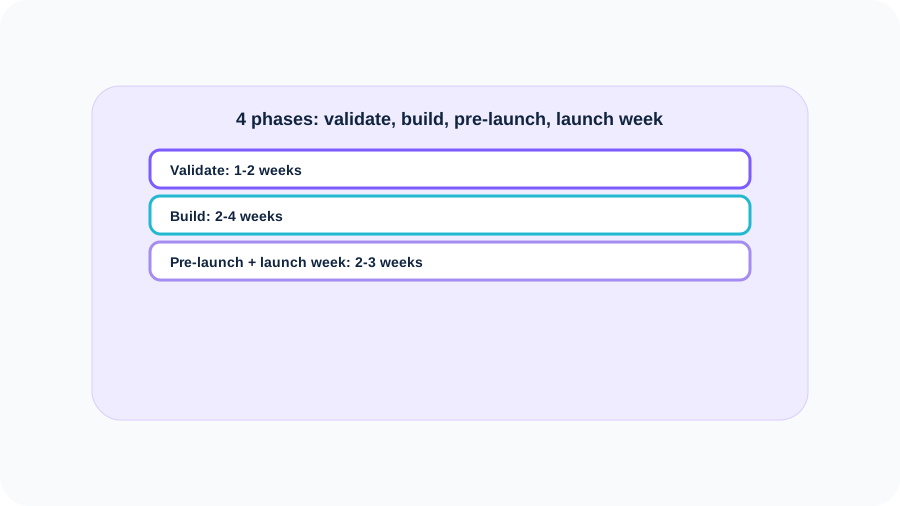
Validate (1 to 2 weeks): confirm real demand before building anything, through direct conversations, a simple survey, or a waitlist page testing the offer. Build (2 to 4 weeks): create the actual product, scoped to what was validated rather than expanding scope mid-build. Pre-launch (2 weeks): build an audience specifically for this product through content and a waitlist, so launch day has an audience already waiting rather than starting from zero. Launch week: announce, follow up, and close.
Worked Timeline: An 8-Week Launch Plan
Weeks -8 and -7: validate demand through direct outreach or a waitlist page. Weeks -6 through -3: build the product itself. Weeks -2 and -1: pre-launch content and waitlist growth, running in parallel with final product polish. Week 0: launch week itself — announce, remind, and close.
Step-by-Step: The Pre-Launch Checklist
Build a waitlist landing page before the product is finished, and start driving people to it during the build phase, not after. Publish 3 to 5 pieces of content or emails that deliver real value related to the product's topic, building trust with the waitlist before ever asking for a sale. Finalize pricing and confirm the payment processor is fully tested with a real test transaction. Publish a clear terms and refund policy page before launch day, not scrambled together after the first customer question. Draft the launch announcement email in advance, during the pre-launch phase, so launch day is about sending and responding, not writing.
Step-by-Step: Launch Week
Day 1: send the main announcement to the waitlist and any existing audience, with a single clear call to action. Day 3: send a reminder highlighting a specific benefit or answering a common question, for anyone who didn't act on day 1. Days 5 to 7: send a genuine urgency signal if one exists (bonus expiring, price increasing) — never a fabricated deadline, since that erodes trust for the next launch. After close: follow up with buyers to confirm delivery went smoothly and follow up separately with non-buyers to understand why, which directly informs the next validate phase.
What Happens After Launch Week Ends
Launch week gets the attention, but for most digital products it accounts for a minority of total lifetime sales — the rest comes from evergreen sales after the launch, to people who never saw the original announcement. Before moving on, convert the launch assets into permanent ones: the announcement email becomes an evergreen welcome-sequence email for anyone who joins the list later, and the strongest piece of pre-launch content becomes a permanent, linkable page rather than disappearing after the launch week it was written for.
Set a specific date, 4 to 6 weeks out, to review actual sales data against the pre-launch validation assumptions — not to judge the launch as a pass or fail, but to feed real numbers into the validate phase of whatever gets built next, which is the step most likely to get skipped once the immediate launch-week push is over.
The Short Version
Validate, build, pre-launch, launch week — 4 phases, typically 6 to 8 weeks for a solo creator. The phase most often skipped is pre-launch: building the audience for the product while it's still being built, not after it's finished. A waitlist started during the build phase, plus 3 to 5 pieces of value-first content before the ask, is what separates a launch week with an audience already waiting from one starting cold. Converting launch assets into evergreen ones afterward is what keeps selling long after launch week ends.
Product recommendation
Recommended DaveWays Resources
Digital Product Launch Checklist Kit
Walks through the 4-phase, 8-week timeline above with a checklist for each step.
SEO Content Planner & Keyword Tracker
Plans the 3-5 pre-launch content pieces described above, so they're ready before the pre-launch phase starts.
FAQ
How long does a digital product launch typically take?
About 6 to 8 weeks for a solo creator, across validate, build, pre-launch, and launch week phases.
What's the most commonly skipped phase in a launch?
Pre-launch — building an audience for the product before it's finished, rather than only announcing it once it's done.
How do I validate demand before building?
Direct conversations with potential customers, a short survey, or a waitlist landing page that tests interest in the specific offer before any product work begins.
How many emails should launch week include?
A practical minimum is 3: a day 1 announcement, a day 3 reminder, and a days 5-7 closing email, spaced to reach people who didn't act on the first one.
Is it okay to create a fake deadline for urgency?
No. A fabricated deadline erodes trust once discovered and damages the audience's willingness to act on the next real launch.
Educational resource only. The timeline above is an illustrative example; actual launch timing varies by product complexity and audience size. See the U.S. Small Business Administration's guide to market research and competitive analysis for further reading on the validate phase.
Join the email list for practical marketing worksheets, buying guides, and product updates.