A sales funnel sounds more complicated than it is. Stripped down, it's three stages: get someone's attention with something free and useful, build enough trust over a few emails that they'd consider paying, and make one clear paid offer. The stages don't change; only the conversion rate at each one does.
The 3 Stages of a Simple Funnel
Stage 1: traffic (a landing page visitor) exchanges an email address for a free lead magnet — a checklist, template, or short guide directly related to the paid offer. Stage 2: a short automated email nurture sequence, usually 3 to 5 emails over 5 to 7 days, builds context and trust without pitching immediately. Stage 3: one clear paid offer, presented once the lead has received real value first, not on the very first email.
Worked Example: The Numbers at Each Stage
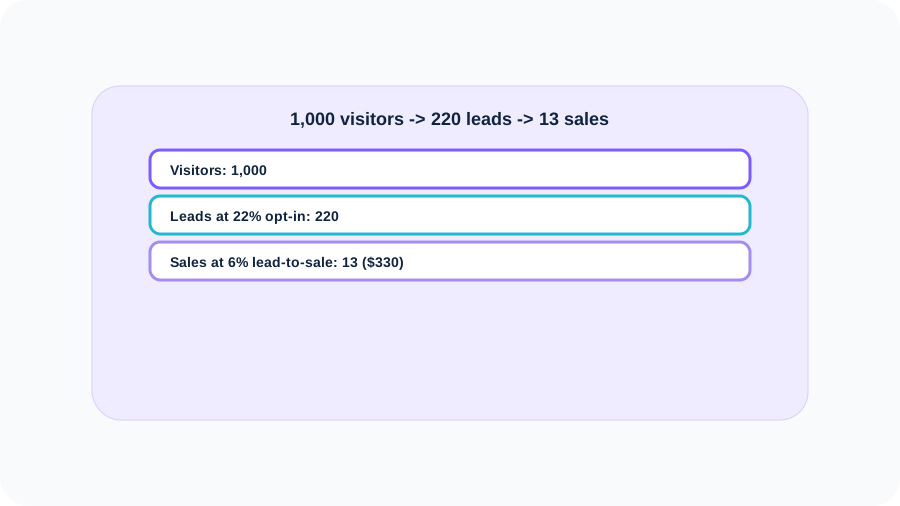
1,000 visitors land on a page offering a free lead magnet. A 22% opt-in rate converts 220 of them into email leads. Over the nurture sequence, a 6% lead-to-sale conversion rate on a $25 product produces roughly 13 sales, for about $330 in revenue. This is an expected value across many visitors, not a guarantee for any single one — the same 22% and 6% rates applied to 10,000 visitors would be expected to produce roughly 132 sales and $3,300, since the conversion rates, not the traffic size, are what's being tested and improved.
Step-by-Step: Building Each Stage
Build the lead magnet first, narrow and specific rather than broad (a single checklist beats a vague "ultimate guide"). Place a single, clear opt-in form on the landing page above the fold. Write a 5-email nurture sequence: email 1 delivers the lead magnet and sets expectations, emails 2 to 4 each deliver one genuinely useful insight related to the paid product, and email 5 introduces the offer directly with a clear call to action.
Every marketing email in the sequence needs to comply with the FTC's CAN-SPAM Act: an accurate, non-deceptive subject line, clear identification as an advertisement where relevant, a valid physical postal address, and a working, honored unsubscribe link. This isn't optional once a business is running a real nurture sequence, and it's the same requirement regardless of how small the list is.
Where Funnels Usually Leak
A weak lead magnet shows up as a low opt-in rate; a missing or generic nurture sequence shows up as a low lead-to-sale rate even with strong traffic. Improving opt-in rate from 22% to 30% (a stronger lead magnet or clearer page copy, same 1,000 visitors) produces 300 leads instead of 220. At the same 6% lead-to-sale rate, that's 18 sales instead of 13, and $450 in revenue instead of $330 — a 36% revenue increase from one stage improvement, without spending anything more on traffic.
Choosing the Right Lead Magnet Format
The format of the lead magnet affects opt-in rate as much as the topic does. A checklist or template that solves one specific, narrow problem in a few minutes of use tends to convert better than a long-form guide or ebook, because the visitor can immediately picture using it, versus an ebook that gets downloaded with good intentions and read later — or never. The best-converting lead magnets are usually a smaller piece of the same thing the paid product does, not a generic, loosely-related freebie.
A useful test: if the lead magnet could stand alone as something worth charging a small amount for, it's specific and valuable enough to convert well for free. If it feels like filler content assembled just to have something to offer, it's worth narrowing the scope before building the rest of the funnel around it.
The Short Version
A simple funnel is lead magnet, nurture sequence, one offer. In this worked example, 1,000 visitors at a 22% opt-in rate and a 6% lead-to-sale rate produced 220 leads, 13 sales, and $330 in revenue on a $25 product. Improving the weakest stage — usually the opt-in rate first, often by narrowing the lead magnet's scope — moves the whole funnel's output more than adding raw traffic to a leaky one.
Product recommendation
Recommended DaveWays Resources
Sales Funnel & Lead Magnet Planner
Maps the 3-stage funnel above and tracks opt-in and lead-to-sale rates at each stage.
Email List Lead Magnet & Funnel Kit
Templates for the lead magnet and 5-email nurture sequence described in the step-by-step section above.
FAQ
What are the 3 stages of a simple sales funnel?
A free lead magnet to capture an email address, a short email nurture sequence, and one clear paid offer.
What's a realistic opt-in rate for a lead magnet?
Rates vary widely by niche and traffic source, but this worked example uses 22% as an illustrative baseline; a stronger, more specific lead magnet can push it higher.
How many emails should a nurture sequence have?
3 to 5 emails over 5 to 7 days is a practical starting length — enough to build context without losing the reader's attention.
Do funnel nurture emails need to follow CAN-SPAM rules?
Yes. Any commercial email sequence must comply with the FTC's CAN-SPAM Act, including an honest subject line, a valid postal address, and a working unsubscribe link.
Should I focus on more traffic or a better conversion rate first?
Usually the conversion rate, since improving the opt-in or lead-to-sale rate multiplies the value of existing traffic, while more traffic through a leaky funnel just produces more leaks.
Educational resource only, not legal or marketing advice. Conversion rates above are an illustrative example; actual results vary by audience, offer, and traffic source. See the FTC's CAN-SPAM Act compliance guide before sending marketing emails.
Join the email list for practical marketing worksheets, buying guides, and product updates.